
HOW TO… PROVIDE RELEVANT INFORMATION ABOUT HEALTH NEEDS
The health element of Education, health and care plans (EHCPs) is a specific area of weakness that is frequently highlighted on Ofsted/CQC local area SEND inspection. One of the issues frequently highlighted is that contributions from health professionals can consist simply of lists of medical conditions, and health practitioners themselves have noted that they do not always know what sort of information they should be including in their health contributions to EHC Needs Assessments.
Whilst health advice should include some identified strengths or what is working well, the bulk of assessments will focus on describing the main difficulties/barriers associated with the child/young person’s health needs, as well as the impacts of these needs.
What do we mean by ‘needs’?
A common misunderstanding when completing statutory health advice forms is around the word ‘needs’, which can be interpreted as what help/support the child/young person needs to receive. However, remember that ‘needs’ actually refers to difficulties or barriers the child/young person faces.
Identified needs should be clearly and comprehensively described, with explanations of any technical terms. The focus should be on presenting needs, rather than complex diagnostic information. Where a child/young person has a diagnosis, health professionals should clearly explain what this looks like for the child/young person and how it affects them e.g. related needs and challenges, rather than just stating the diagnosis. This is because a diagnosis is not a need in and of itself; it is necessary to describe the needs and impacts associated with a diagnosis. For example, a diagnosis of ADHD may impact on ability to cope in the classroom.
Thinking about impacts
Health advice should also provide information about how identified health needs (not just diagnoses) impact on different aspects of a child/young person’s life, including their academic progress, independence and life skills, and community inclusion.
For example, motor and sensory processing needs may impact on the development of age-appropriate self-care skills.
Differentiating between diagnoses, needs and impacts
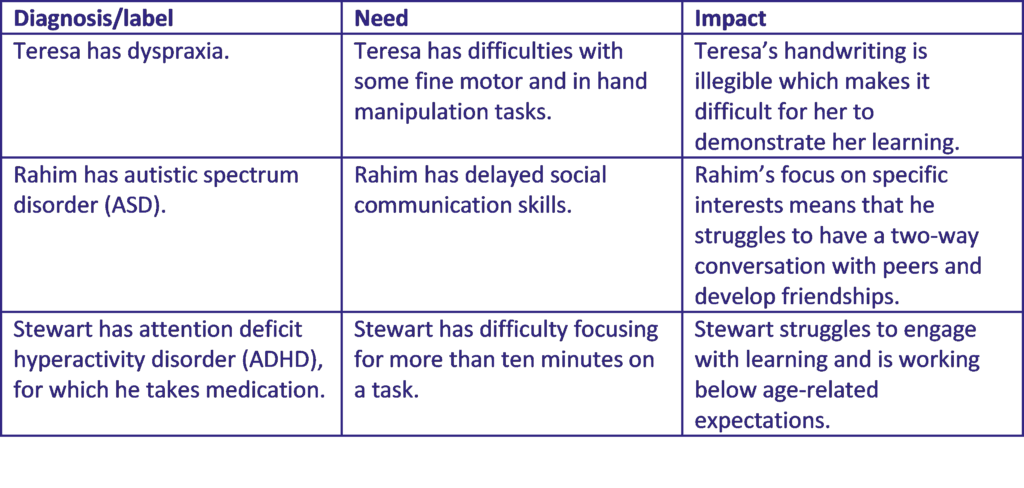
Ensuring that health assessments include comprehensive and relevant information about health needs that extends beyond just providing a diagnosis or label is crucial to establishing a holistic picture of a child/young person for their EHC plan. Health professionals, and anyone else involved in developing the health element of plans, should therefore be clear about the difference between diagnoses and associated needs and impacts, as shown in the below examples:
Further learning
If you would like to learn more about health contributions to EHC plans, take a look at the CPD accredited Health Input in EHC Plans online training course.